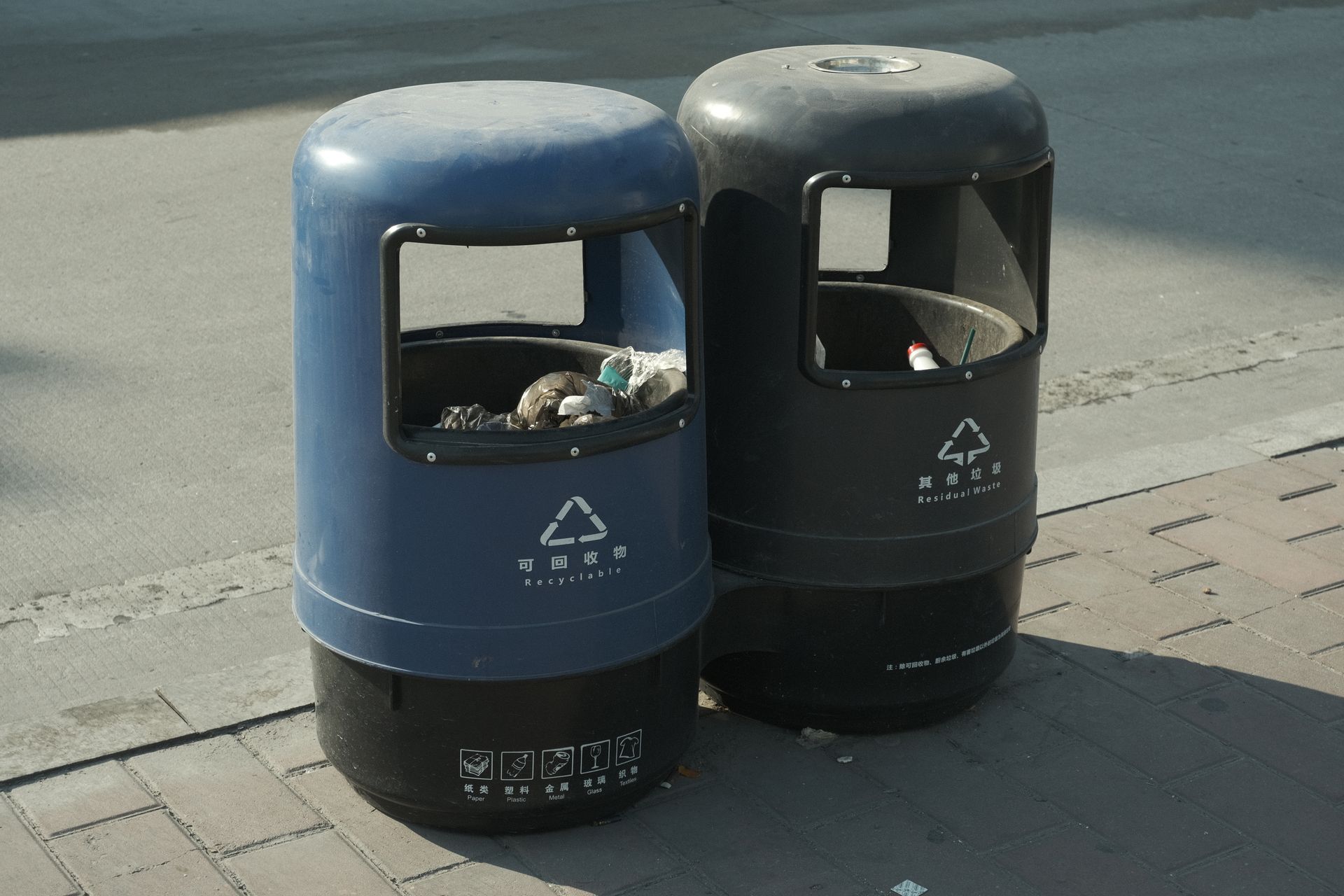
Widgelix monitors the fill level of every container in real time — street bins, underground containers, industrial skips — and turns collection from fixed routes into demand-driven operations. On your own LoRaWAN network, with an AI layer your team can simply ask.

Most waste collection still works blind: trucks follow the same route on the same days, whatever is actually inside the bins. The result is waste in both directions — vehicles, fuel, and crew hours spent emptying half-full containers, while high-traffic spots overflow two days before the next visit and generate complaints, litter, and pests.
“When any container passes 80% full — add it to today's collection list and notify the depot. If temperature inside a container spikes — alert immediately: possible fire.”
Two rules, every bin in the city.
Waste monitoring is a textbook LoRaWAN case: hundreds or thousands of battery sensors scattered across streets, courtyards, and underground containers — places with no power and no Wi-Fi. A few gateways cover an entire district, sensors run for years on a battery, and with the GreenMesh LoRaWAN Network Server the whole chain belongs to you: your gateways, your network, your data. No third-party network operator, no per-message fees, and no coverage promises you don't control.
Learn more about the GreenMesh LoRaWAN Network ServerWidgelix ships with a native MCP server, so AI assistants like ChatGPT and Claude connect directly to your waste data — and to the platform itself. Planning stops being a spreadsheet exercise and becomes a conversation:
The agent reads your fill-level history, spots the patterns, and answers in plain language — which locations to visit, which to skip, and where containers are over- or under-provisioned. With the right permissions, it can also set up alerts, tune thresholds, and build dashboards for a new district — from a conversation, not a console.
Tell us about your operation — how many containers, what kinds, and how you collect today. We'll show you how fill-level monitoring on your own LoRaWAN network turns fixed routes into demand-driven collection, with the data to prove the difference.