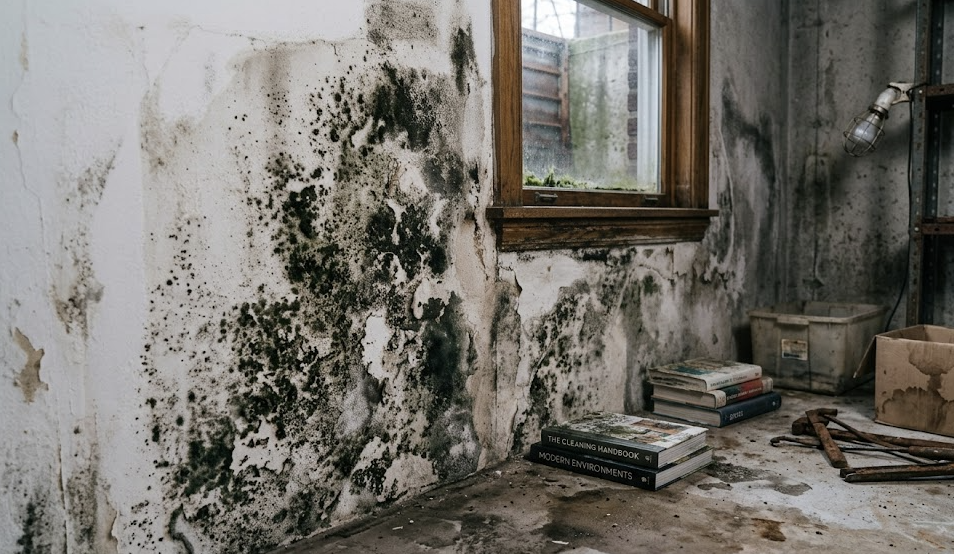
Continuous temperature, humidity, and dew-point monitoring across homes spots the conditions that grow mould days before it appears — and logs every reading as an evidence trail. Built for social landlords facing Awaab's Law, and for any operator protecting homes and asset value at scale.

By the time mould is visible, the damage — to health, to the building, and to trust — is already done. Most damp problems are discovered from a complaint, not from data. There's rarely a record of when conditions turned dangerous or who knew what when. And too often the cause is wrongly written off as tenant "lifestyle" instead of being investigated.
Since 27 October 2025, Awaab's Law requires social landlords in England to investigate and act on damp and mould hazards within fixed timescales — and to keep records proving they did. Manual, complaint-driven processes weren't built for that. Continuous monitoring is.
Looking ahead — From October 2026, Awaab's Law expands to further hazards including excess cold and heat — the same monitoring approach extends to those conditions too.
It's not a humidity gauge. The rule engine flags risk only when conditions persist — so you act on real mould risk, not on a passing spike from a hot shower.
Damp doesn't just risk health and compliance — it quietly destroys building fabric and value. Catching it early turns expensive reactive restoration into cheap preventive action, across an entire portfolio from one dashboard.
No tool makes you compliant on its own. The solution helps you meet the law's demands in practice — early awareness of damp risk and an automatic evidence trail of conditions and response. Your policies, investigations, and repairs remain yours.
Mould grows when surfaces stay damp — high relative humidity and a small gap between air and dew-point temperature, sustained over time. By monitoring those conditions continuously and flagging persistent risk, the system warns you days before mould appears.
No. The sensors use LoRaWAN — long-range, low-power, independent of resident broadband. They run for years on battery and need no resident interaction.
Yes. Monitor one property or an entire portfolio from one platform, with per-home and portfolio-level views and reporting.
From October 2026 the law extends to further hazards such as excess cold and heat. The same monitoring approach covers those conditions, so the system grows with the regulation.
Yes — the platform is white-label, so integrators and providers can deliver it as their own solution.
Tell us about your housing stock. We'll show you how continuous damp monitoring helps you act early, protect residents and buildings, and evidence your response — whether you're meeting Awaab's Law or protecting a private portfolio.